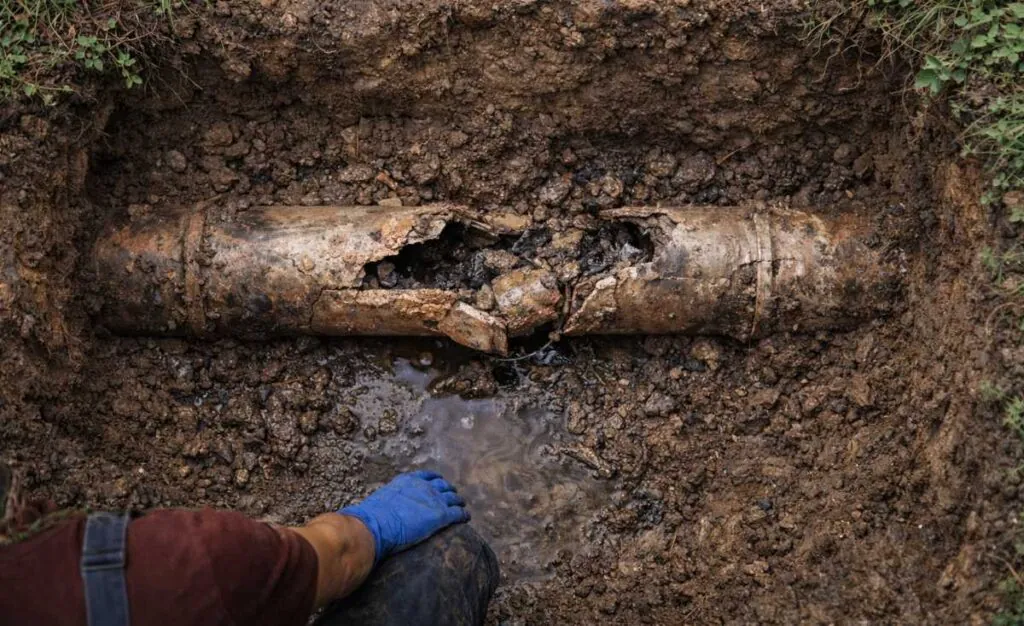
Trenchless & Traditional Sewer Line Replacement Done Right
When a sewer line is too far gone for a spot repair, patching it again just postpones the inevitable — and the next backup. We replace failed sewer lines with modern pipe built to last for decades, using trenchless methods whenever your line qualifies so your yard doesn't become a construction site.
Full Sewer Replacement A repair fixes a section. A replacement fixes the problem for good. Here's how you know which one you're looking at.
If the same stretch of pipe has been repaired more than once and problems keep returning, the line itself is telling you it's done.
Clay and cast-iron lines common in Pueblo's older neighborhoods have a finite lifespan. Once deterioration is widespread, replacement beats another patch.
Cutting roots buys time, not a fix. If intrusion returns within a season or two of clearing, the pipe is compromised enough to warrant replacement.
A collapsed pipe has lost its shape entirely — it can't be lined or patched. A camera inspection shows exactly where, and replacement is the only real option.
A belly holds water and waste instead of draining it. Spot repairs can't correct the grade; replacing the section restores proper slope.
When the camera shows cracks, offsets, or corrosion at multiple points instead of one bad spot, replacing the full run usually costs less than repairing it piece by piece.
Not every replacement means an open trench across your yard. We use the least disruptive method your line qualifies for — and we'll explain why.
A bursting head pulls brand-new HDPE pipe through the old line, fracturing the failed pipe outward as it goes. One or two small access pits instead of a full trench — and new pipe rated for 50+ years.
A resin-saturated liner is inverted into the existing pipe and cured into a smooth, jointless new pipe inside the old one. Ideal when the line still holds its shape but is cracked or root-damaged.
Sometimes there's no way around digging — fully collapsed lines, severe bellies, or pipe that needs regrading. We excavate carefully, replace the line, backfill, and restore the area.
A sewer replacement is a big job, so we run it like one: inspected, quoted, permitted, and verified — with you informed at every step.
We run a camera the full length of the line and show you exactly what we see on screen. No guesswork, no pressure — just the footage and an honest read.
If a repair would genuinely solve your problem, we'll tell you. If replacement is the right call, you get one firm, written price before any work begins.
We handle Pueblo-area permits and utility locates, then plan the installation method that disturbs your property the least.
Most trenchless replacements finish in a day or two. We protect landscaping, keep the site orderly, and keep you updated as the work progresses.
We camera the new line to verify the installation end to end, then walk you through what was done and how to keep it flowing for decades.
Choose repair when the damage is localized to one spot, the rest of the pipe looks good on camera, and the line is under roughly 25 years old. Choose replacement when damage spans multiple areas, the pipe material is at the end of its life, roots return soon after clearing, or you've already paid for repairs that didn't hold. We'll show you the camera footage and give you a straight recommendation either way — we'd rather earn a customer for life than sell a replacement you don't need. If a spot repair is the smarter move, our sewer line repair team handles that too.
Every line is different, which is why we quote from a camera inspection — never a phone guess. These are the factors that move the number.
A short, shallow run to the main costs far less than a long, deep line crossing the whole property. Depth especially drives excavation work.
Trenchless methods often cost less overall once you factor in avoided landscape and concrete restoration — but not every line qualifies.
Driveways, patios, mature trees, and crossing utilities all add complexity. We plan around them and price it transparently.
Municipal permits and putting your yard, driveway, or landscaping back the way we found it are part of every honest quote.
The camera inspection is free with any replacement quote. Call 719-280-6619 and we'll take a look.
Sewer backups don't politely wait until Monday morning. When wastewater is coming back into your home, or you're seeing sewage exposure in your yard, time matters — both for your health and for preventing further damage.
A sewer replacement is one of the biggest plumbing jobs a homeowner will ever buy. Here's how we earn that trust.
We diagnose from footage, not assumptions. You see what we see before anyone talks price.
If your line qualifies for pipe bursting or lining, we'll recommend it — smaller footprint, faster finish.
A single written quote before work starts. No mid-job surprises, no vague allowances.
Permitted work by a licensed, insured crew — the way a job this size should be done.
We protect landscaping and hardscaping, and we leave the property as close to found-condition as the work allows.
Expansive clay soils, aging cast iron downtown, root-prone clay pipe toward Pueblo West — we plan replacements around Pueblo's actual conditions.
From the older homes near downtown Pueblo with original cast iron still in the ground, to newer construction out in Pueblo West dealing with root intrusion from mature landscaping, we've worked on sewer lines across just about every part of the county. If your address isn't listed here, give us a call — there's a good chance we still cover it.
Sewer line replacement is often paired with other drain services. Here's what else we offer for Pueblo homes and businesses.
Considering a replacement? These explain the key decisions before you sign anything.
Pipe bursting and CIPP lining can replace a sewer line with minimal digging — but only when the existing pipe still holds enough shape and the line has proper access points.
Fully collapsed sections, severe bellies, or lines that need regrading usually require traditional excavation. A camera inspection determines which camp your line falls into.
Clay tile and cast iron — common in Pueblo's older neighborhoods — typically last 40 to 60 years, and expansive clay soils plus freeze-thaw cycles don't do them any favors.
Modern HDPE and PVC replacements are rated for 50 to 100 years, which is why a full replacement often pencils out better than nursing an aging line along.
A camera inspection reveals cracks, offsets, root intrusion, bellies, and collapses in real time — with distance markers so problems can be located precisely from above.
Ask to watch the footage yourself. Any contractor recommending a five-figure replacement should be willing to show you exactly why.
Can I see the camera footage? Is trenchless an option for my line? What's itemized in the quote? Who pulls permits? What happens to my yard?
Straight answers to those five questions separate reputable contractors from the rest — on any sewer job, not just ours.
Cutting roots removes the symptom, not the entry point. Fine root hairs re-enter through the same cracks and joints, often within a season or two.
When clearing becomes a recurring expense, lining or replacing the compromised section removes the entry points for good.