Broken, Cracked, or Root-Damaged Sewer Pipes Repaired Fast
We've spent over two decades digging into Pueblo's sewer lines — literally. From century-old cast iron under the older neighborhoods to root-damaged clay pipe out in Pueblo West, we've seen what fails, why it fails, and what it actually takes to fix it right.
Sewer Camera Inspection
Most sewer line failures don't happen overnight. There's usually a pattern of smaller signs beforehand — here's what to watch for around a Pueblo home.
Persistent sewer odors around your home may indicate cracks or leaks in the sewer line letting gas escape into the soil or your yard.
Unusually wet or soggy areas — especially ones that don't dry out after a few sunny days — can be a sign of underground pipe damage leaking wastewater.
If several fixtures back up at once — toilet, tub, and kitchen sink all acting up the same week — the issue is often in the main sewer line, not the individual fixture.
Air trapped in damaged sewer pipes can cause unusual gurgling or bubbling sounds, especially right after you run water somewhere else in the house.
A sewer restriction may affect sinks, showers, tubs, and toilets all at once rather than just a single isolated fixture.
Recurring blockages that keep coming back no matter how often you clear them often indicate structural pipe problems further down the line.
Pueblo's mix of soil types, mature tree-lined streets, and a wide range of home ages means we see just about every kind of sewer failure there is.
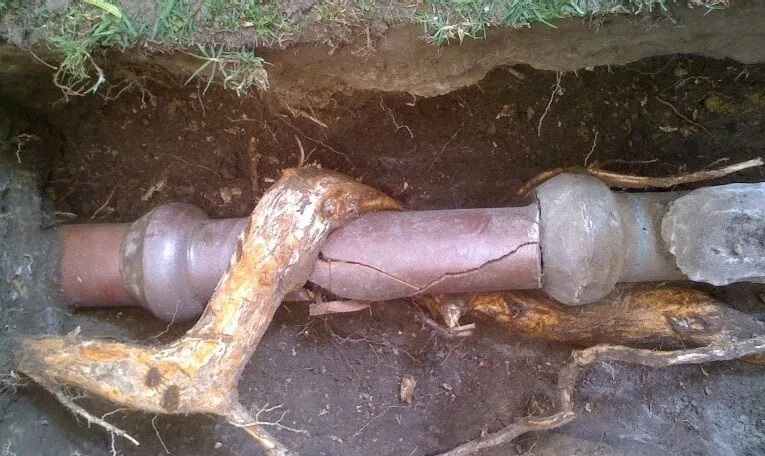
Roots are drawn to the moisture inside sewer pipes and work their way into joints and hairline cracks. Once inside, they expand and split the pipe further while creating a net that catches debris and causes recurring backups.
Shifting soil, settling foundations, and decades of ground freeze-thaw cycles put real stress on buried pipe. Add the age of a lot of Pueblo's housing stock and physical breaks become a common call for us.
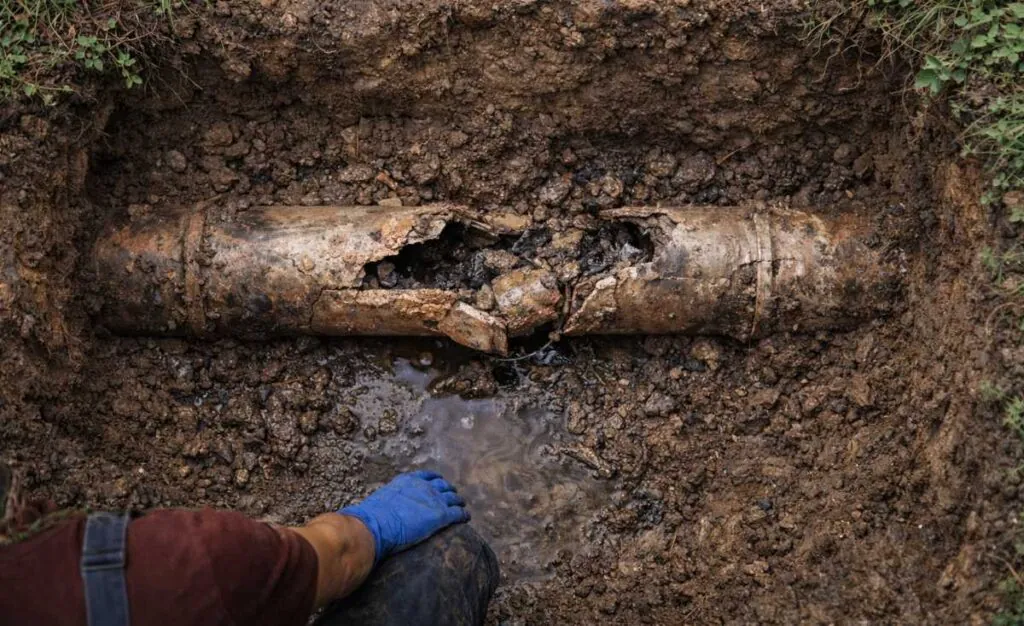
Even a hairline crack lets groundwater seep into the line, which can overload your sewer capacity during wet weather and allows wastewater to leak into the surrounding soil.
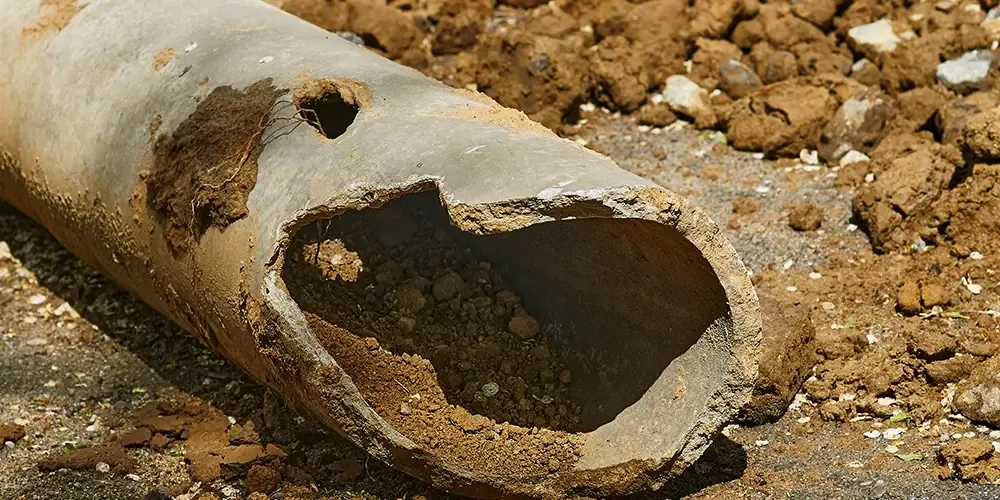
This is severe structural failure where the pipe has lost its shape entirely and wastewater has nowhere to go. It's usually the end result of years of undetected corrosion, root damage, or excessive soil pressure.
When a section of pipe loses its proper slope and sags, wastewater pools instead of draining away. That standing wastewater attracts solids and debris, leading to recurring backups in the same location.
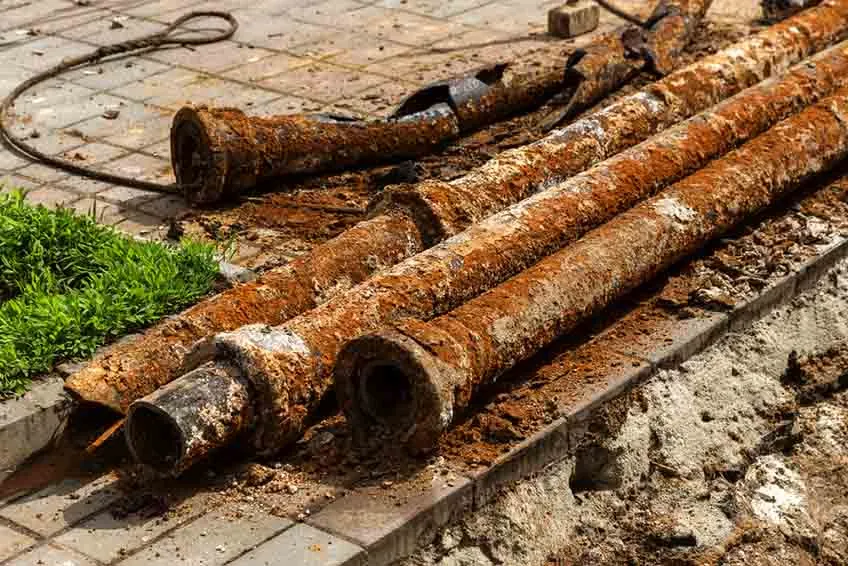
Common in older Pueblo properties, cast iron corrodes from the inside out over decades. The interior surface roughens and narrows, then eventually rusts through, creating leaks and structural weak points.
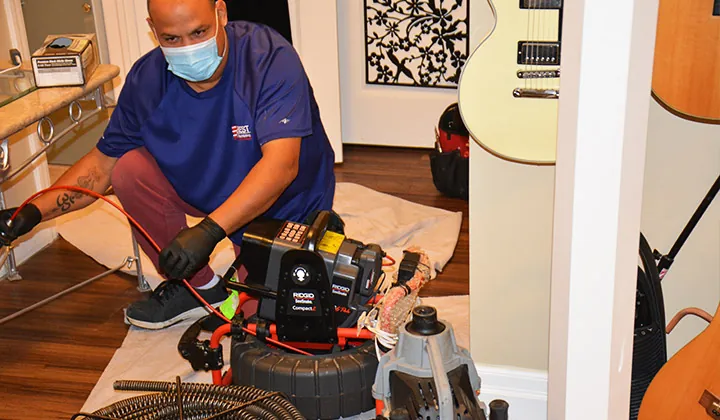
Before we recommend any repair, we look. A camera inspection tells us exactly what's wrong and exactly where — which means we're not guessing, and you're not paying to dig up the wrong section of yard.
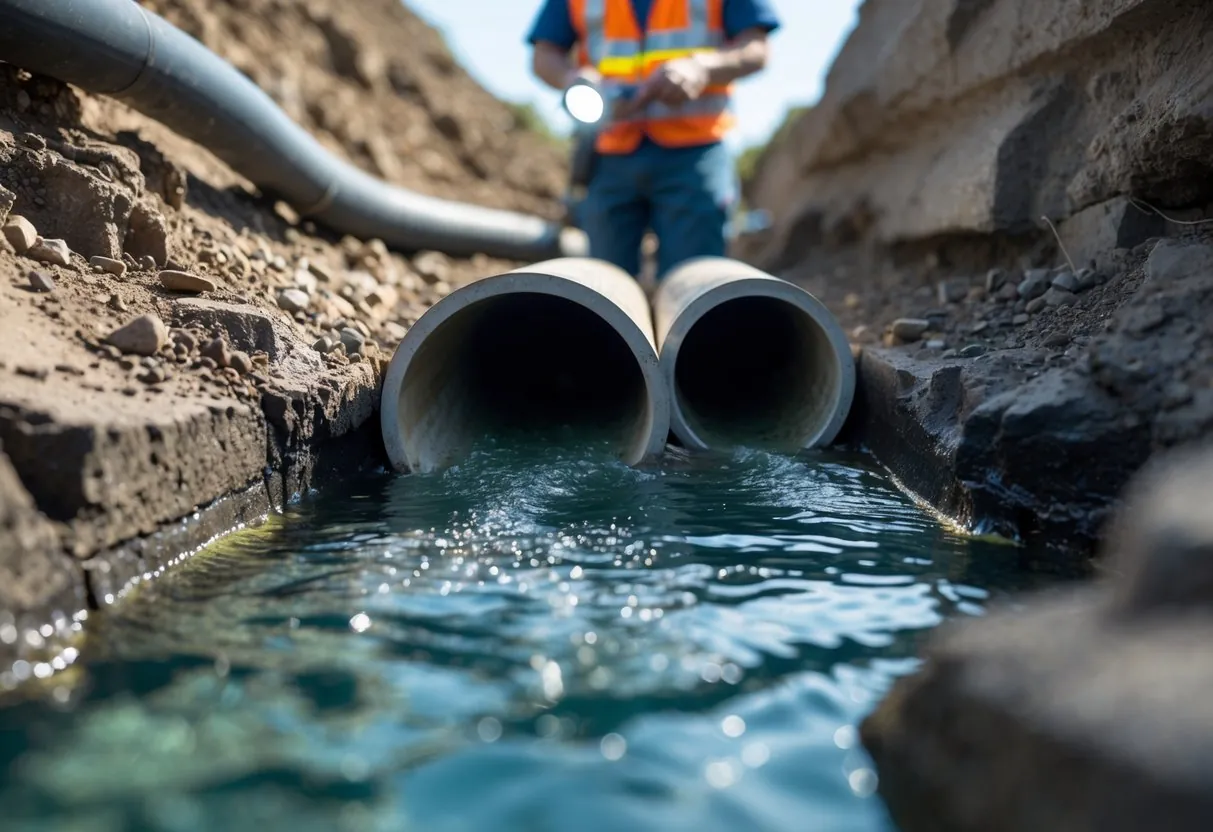
We feed a waterproof camera through the line to locate the exact issue — whether that's roots, a crack, an offset joint, or something more serious.
We identify exactly what we're dealing with: roots, cracks, pipe offsets, bellies, or a full collapse, and how far the damage extends.
We walk you through repair versus replacement in plain terms, including what each option actually involves and what it's likely to cost.
Depending on the damage, we'll either excavate the affected section or use trenchless methods that avoid tearing up your yard.
We run water and re-scope the line where needed to confirm proper flow and operation before we consider the job finished.
Camera inspections are one of the best tools we have for avoiding unnecessary digging. Instead of excavating a long stretch of yard on a hunch, we know the exact location and depth of the problem before a shovel ever goes in the ground.
| Factor | Repair | Replacement |
|---|---|---|
| Scope of Damage | Localized damage | Entire pipe failure |
| Cost | Lower cost | Higher cost |
| Timeline | Faster completion | Longer project |
| Excavation | Minimal excavation | More excavation |
We give you real numbers based on what the camera inspection actually shows — not a guess over the phone.
Sewer backups don't politely wait until Monday morning. When wastewater is coming back into your home, or you're seeing sewage exposure in your yard, time matters — both for your health and for preventing further damage.
From the older homes near downtown Pueblo with original cast iron still in the ground, to newer construction out in Pueblo West dealing with root intrusion from mature landscaping, we've worked on sewer lines across just about every part of the county. If your address isn't listed here, give us a call — there's a good chance we still cover it.
Sewer line repair is often paired with other drain services. Here's what else we offer for Pueblo homes and businesses.
A few articles worth reading if you're trying to understand what's going on with your sewer line before you call anyone.
Tree roots are one of the leading causes of sewer line damage in Pueblo and Pueblo West. Roots naturally seek moisture and can enter small cracks or loose joints in underground pipes.
Once inside the line, they continue growing and may eventually cause recurring clogs, slow drains, and major structural damage.
Professional camera inspections and hydro jetting can often remove root intrusion before complete sewer line replacement becomes necessary.
The cost of sewer line repair in Pueblo depends on the severity of the damage, the depth of the pipe, and whether excavation is required. Minor repairs are generally less expensive than replacing an entire sewer line.
Tree root intrusion, cracked pipes, collapsed sections, and corroded cast iron lines often require more extensive repairs. A sewer camera inspection helps determine the exact problem and allows plumbers to recommend the most cost-effective solution.
In some cases, spot repairs are sufficient, while severe damage may require partial or complete sewer line replacement. Getting the issue diagnosed early can prevent additional damage and help reduce overall repair costs.
Not every damaged sewer pipe needs complete replacement. In many cases, isolated cracks, minor root intrusion, or a small broken section can be repaired without replacing the entire line.
Sewer repair is often the most cost-effective option when the damage is limited to a specific area. Spot repairs and trenchless repair methods can restore the line while minimizing excavation and disruption to your property.
However, replacement may be the better long-term solution if the sewer line has multiple breaks, severe corrosion, bellied sections, or a complete collapse. Older clay and cast iron pipes are especially prone to recurring problems that make replacement more practical.
A sewer camera inspection provides a clear view of the pipe's condition and helps determine whether repair or replacement is the best investment for your home.
Sewer line problems rarely happen without warning. Recognizing the early signs of a damaged sewer pipe can help homeowners in Pueblo avoid costly repairs and major sewage backups.
Common symptoms include multiple slow drains, frequent toilet backups, gurgling noises coming from plumbing fixtures, unpleasant sewer odors, and soggy patches in the yard. Some homeowners also notice unusually green grass growing above the sewer line due to leaking wastewater.
Cracked pipes, tree root intrusion, corrosion, and collapsed sections can all produce similar warning signs. A professional sewer camera inspection can pinpoint the exact cause and determine whether sewer line repair or replacement is necessary.
Addressing these problems early can prevent extensive property damage and restore proper drainage before the issue becomes an emergency.
Hydro jetting is one of the most effective methods for removing grease, sludge, scale buildup, and tree roots from sewer lines. When performed by experienced plumbers, hydro jetting is generally safe for most residential sewer systems.
However, severely corroded, collapsed, or structurally damaged pipes may not be suitable candidates for high-pressure cleaning. Older clay pipes and deteriorated cast iron lines should be inspected with a sewer camera before hydro jetting is performed.
A professional camera inspection helps determine whether the pipe is strong enough to withstand hydro jetting or if repairs are needed first. In many cases, hydro jetting can restore flow and prevent recurring blockages without damaging healthy pipes.
If your home has aging sewer lines, a thorough inspection is the best way to determine whether hydro jetting is the safest and most effective solution for your plumbing system.