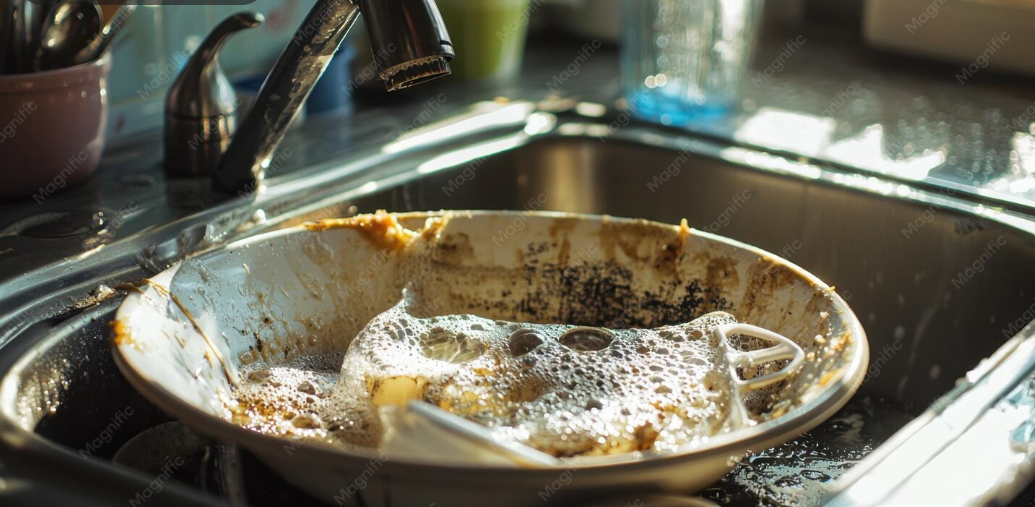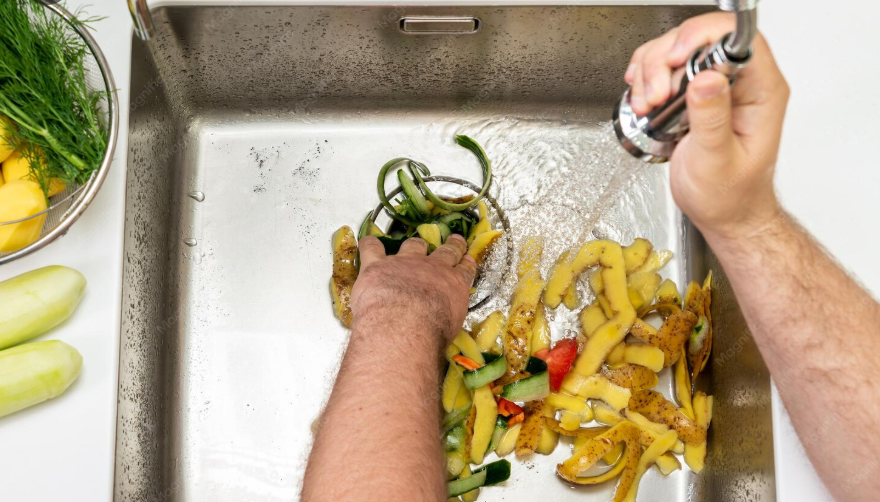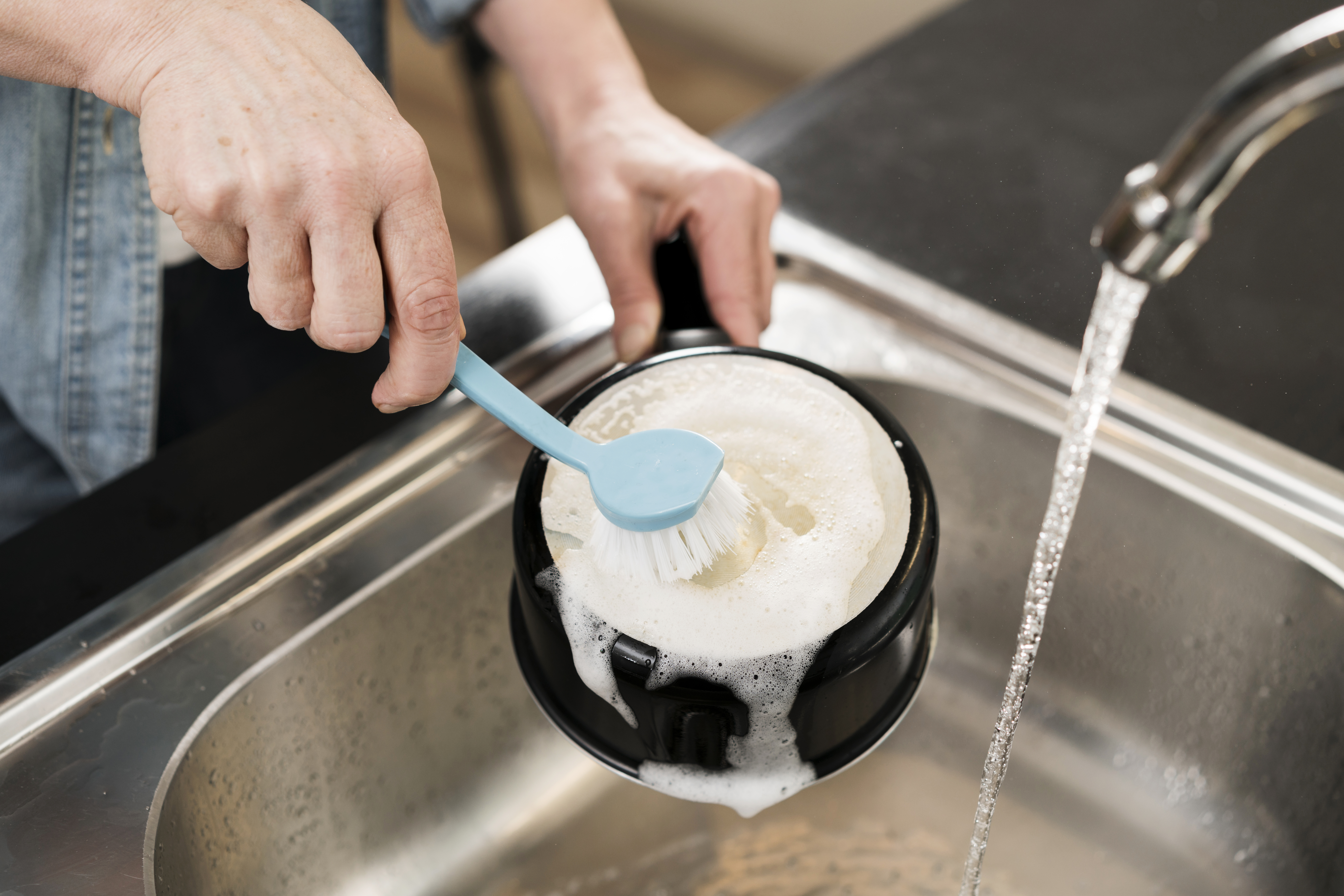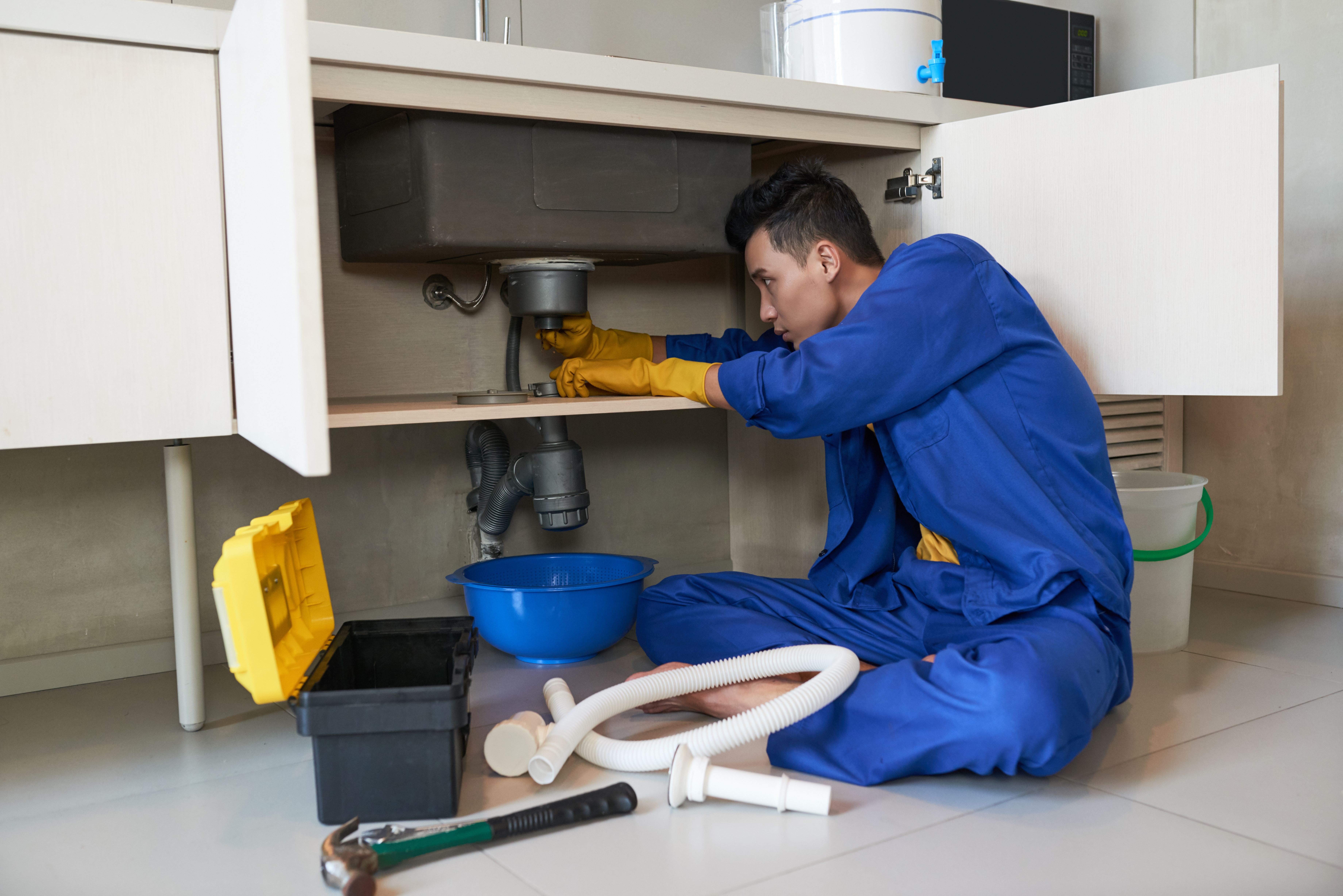
Grease, food scraps, soap buildup — kitchen drains take a beating every single day. When your sink starts pooling, the dishwasher backs up, or both bowls refuse to drain, that problem doesn’t fix itself. We clear kitchen drains throughout Pueblo using professional-grade equipment, and we can usually be there the same day you call.
Every time you rinse a pan or wash dishes, a thin film of cooking fat coats the interior of your drain pipe. Hot grease feels liquid — it seems to rinse away cleanly. The problem is what happens once the water cools. Fat re-solidifies on the pipe walls within a few feet of the drain opening, and each use deposits another layer.
Over 12 to 18 months of regular cooking, those layers accumulate into a buildup that significantly narrows the pipe and roughens the interior surface. Food particles start catching in the grease film. Soap residue bonds to it. The drain that was perfectly fine starts draining slowly — then barely at all.
By the time your sink starts pooling, the buildup is already substantial. This is why we consistently find more material in kitchen drains than homeowners expect. Our professional drain cleaning service removes the entire deposit — not just punches a hole through it. For heavy grease, hydro jetting scrubs the pipe walls completely and produces significantly longer clearance between cleanings.
Kitchen drain failures don’t happen suddenly — they build over months. Here’s what’s actually going on inside the pipe and why each cause creates the problems it does.
Most CommonHot grease feels liquid and seems to rinse away cleanly, but it re-solidifies on the pipe walls within a few feet of the drain opening as soon as it contacts cooler pipe. Every cooking session deposits another thin layer. Over 12 to 18 months of regular cooking, those layers accumulate into buildup that narrows the pipe and roughens the interior surface — which then catches food particles and soap residue, accelerating the problem. This is why kitchen drains that seem perfectly fine suddenly go slow all at once: the accumulation reaches a tipping point where even small amounts of debris cause visible pooling.
Disposal-RelatedThe disposal grinds food into small particles, but those particles still travel through 20 to 30 feet of drain pipe before reaching the main sewer line. If that pipe has grease on the walls, food particles catch and accumulate. Pasta and rice expand in water and can swell inside the pipe. Coffee grounds are heavy enough to settle in the p-trap before reaching a slope that carries them further — and they compact into a dense plug over dozens of brewing cycles. Fibrous vegetables leave stringy strands that catch on rough interior surfaces. A disposal in heavy use typically means the kitchen drain needs professional cleaning more often, not less.
Hard Water FactorDish soap leaves a film on pipe walls that roughens the interior surface, making grease and debris adhere more readily. In Pueblo’s moderately hard water, soap reacts with dissolved calcium and magnesium to form soap scum that bonds more stubbornly to pipe walls than soap alone. The same minerals that leave white scale on faucets also deposit inside drain pipes — gradually narrowing the interior and creating an irregular surface. Neither soap film nor mineral scale causes clogs on their own, but together they accelerate the timeline of every other type of buildup significantly.
Many Pueblo homes built through the 1970s still have original galvanized steel or cast iron drain pipe. As these pipes age, interior corrosion creates a rough, pitted surface that grease and debris adhere to far more aggressively than smooth modern PVC. A kitchen drain on corroded pipe typically needs professional cleaning twice as often as the same usage level on modern pipe. Chemical drain cleaners used repeatedly to fight recurring clogs in these systems accelerate the corrosion further. When we scope an older kitchen line and find this kind of deterioration, we tell you honestly whether cleaning alone is a lasting solution or whether a pipe section replacement makes more sense.
These aren’t just symptoms to recognize — each one tells you something specific about where the problem is and how far along it’s gotten.
The earliest warning. The pipe isn’t blocked yet — it’s narrowed. The best time to address it is now, while the job is faster and less expensive than waiting for a complete blockage.
The line is blocked or very nearly so. A plunger gives temporary relief at best — the underlying buildup remains and the clog re-forms quickly, usually within days.
Both bowls share the same p-trap. When the blockage is at or past the trap, neither drains. Plunging one bowl pushes water into the other without resolving anything.
The dishwasher drains into the kitchen line. When that line is restricted, the pump pushes water back up into the sink rather than through. Clearing the kitchen drain almost always resolves it.
Decomposing food particles trapped in grease-coated pipe walls produce sulfur compounds that smell like sewage. The odor intensifies in warm weather and won’t clear until the material causing it is removed.
Air being displaced by water past a partial restriction. A reliable indicator of buildup somewhere in the drain line — not just in the visible p-trap under the sink.
A drain that re-clogs within weeks of clearing has grease on the walls that wasn’t removed — just punctured. This pattern calls for hydro jetting rather than another round of snaking.
When kitchen and bathroom drains are sluggish simultaneously, the issue is likely in the main sewer line downstream — not the kitchen branch drain alone.
Both methods clear kitchen drains. They work differently and produce different results. Here’s an honest look at which one fits your situation.
| Factor | 🐍 Drain Snaking | 💧 Hydro Jetting |
|---|---|---|
| Upfront Cost | ✓ Lower | ⚡ Higher |
| First-Time Food Clogs | ✓ Excellent | ✓ Excellent |
| Grease Wall Removal | ✗ Clears channel only | ✓ Scrubs entire wall surface |
| Recurring Clogs | ⚡ Often returns within weeks | ✓ Months to years between cleanings |
| Root Cutting | ⚡ Cuts, does not remove | ✓ Cuts and fully flushes roots |
| Pipe Wall Cleaning | ✗ Center of pipe only | ✓ Full 360° interior surface |
| Time Required | ✓ 30–60 min | ⚡ 1–2 hours |
| Best For | First-time clogs, food blockages, quick fix needed | Grease-heavy lines, recurring problems, commercial kitchens |
Every job follows the same careful sequence — from first look to confirmed full flow.
We check the sink, the under-sink plumbing, the p-trap, and the drain access point before doing anything. Understanding what we’re working with prevents surprises mid-job.
We identify where the restriction is — trap, branch line, or further downstream — and estimate the blockage type before choosing the right method.
Snake or jet — the right call depends on blockage type, pipe condition, and whether this is a recurring problem. We explain the recommendation and the price before starting.
We work the cable or jetting nozzle through the line systematically — breaking apart and flushing the obstruction completely rather than just creating a temporary opening.
We run water and confirm the drain is clearing at full speed before packing up. If flow isn’t completely restored, we find out why before we leave.
We tell you what we found, whether a follow-up service makes sense, and what habits will extend the time before the next cleaning is needed.
A commercial kitchen that can’t drain is a closed kitchen. A backup before Thanksgiving doesn’t wait for Monday. We handle urgent kitchen drain situations throughout Pueblo at any hour.
You get the exact price before we start. No hourly rates, no surprise charges at the end of the job.
Some approaches are genuinely worth trying. Others cause more trouble than they solve. Here is what we would honestly tell a neighbor.
Most kitchen drain failures are preventable. These are practical habits that make a real difference.
Cool fat in the pan, pour it in a jar, throw the jar away. Even small amounts done daily add up into significant buildup over months.
Less food entering the drain means less material catching in grease on the pipe walls. A quick scrape takes seconds and has real cumulative effect.
Catches food particles before they enter the pipe. Empty it after each sink session. One of the single most effective clog-prevention habits.
Cold water keeps fats solid so the disposal can chop them rather than sending liquid fat down the pipe. Run water 30 seconds after grinding stops.
They settle in the p-trap and compact into a dense plug over dozens of brewing cycles. The trash or compost bin is the right destination.
Run the hot tap for 30–60 seconds after washing. Carries loosened soap and light grease further down the pipe before it re-solidifies.
Pasta, rice, and bread expand in water and can block the pipe even after grinding. Better in the trash or compost.
A drain noticeably slower than it used to be is building toward a complete clog. Cleaning it now is faster and cheaper than waiting for a full backup.
Unscrew the slip joints and clear the curved section under the sink once a year. Takes 15 minutes and removes debris before it migrates further down the line.
For a household that cooks regularly, annual or biannual drain cleaning prevents grease from reaching blockage level. Far cheaper than emergency service.
Enzyme-based treatments (not caustic cleaners) digest grease and organic matter. Used as monthly maintenance, they slow buildup meaningfully between professional cleanings.
Even a tablespoon of bacon fat poured down while hot spreads through the pipe before solidifying on the walls. Container plus trash bin is the only reliable method.
A few factors specific to the Pueblo area create conditions where kitchen drain buildup develops more quickly than national averages suggest.
Pueblo’s municipal water supply runs moderately hard, carrying dissolved calcium and magnesium from regional geology. These minerals precipitate on pipe walls when water cools, adding a scale layer that grease adheres to more readily. Hard water also reacts with dish soap to form soap scum that bonds more stubbornly to pipe interiors than simple soap residue, creating conditions where buildup accumulates faster than in soft-water areas.
Many of Pueblo’s established neighborhoods have original drain pipe from the 1950s through 1970s. Galvanized steel from that era corrodes on the interior, creating a rough surface that grease and debris adhere to far more aggressively than smooth modern PVC. Homeowners near downtown and in historic neighborhoods often find kitchen drains need attention more frequently than newer Pueblo West properties for exactly this reason.
Pueblo winters are cold enough that uninsulated crawl space pipes and pipes running along exterior walls can drop significantly in temperature. Cooking fat hitting a cold pipe section solidifies almost immediately rather than traveling further down the line. This concentrates grease accumulation near where warm pipe becomes cold — often in a section that is harder to reach with a standard snake.
Late November through Christmas is peak season for kitchen drain emergency calls in Pueblo. Large gatherings mean significantly more cooking, more dishes, more fat going down the drain. A drain that has been gradually narrowing handles everyday use acceptably, then fails completely under holiday cooking load. Having it cleaned before the holidays is a practical investment if your sink has been slow.
Pueblo’s restaurants generate far more cooking fat per hour than a home kitchen does in a week. Commercial kitchen lines require hydro jetting on a scheduled maintenance basis — typically quarterly — to prevent grease accumulation that causes backups during service. We handle commercial kitchen drain cleaning throughout Pueblo and set up maintenance schedules for restaurant operators.
Original cast iron drain pipe in older Pueblo homes can be 50 to 70 years old, and interior corrosion at that age is significant. A kitchen drain that keeps blocking despite regular cleaning sometimes indicates the pipe itself has deteriorated beyond what cleaning alone can address. A camera inspection confirms it — and if pipe repair is needed, our sewer line repair team handles that work.
The questions we hear most often from Pueblo homeowners about kitchen drain cleaning — answered plainly.
Five short reads on the kitchen drain questions we hear most — written plainly, the way we would explain it in person.
Hot grease liquefies and seems to rinse away, but it re-solidifies within a few feet of the drain opening as soon as it contacts cooler pipe. Every cooking session deposits another thin layer. Over 12 to 18 months those layers accumulate into significant narrowing that roughens the interior surface and catches everything else that passes through. Boiling water melts the fat temporarily but does not remove it — it just travels a bit further before re-solidifying. The fix is simple: cool the grease, pour it in a container, and throw it in the trash. A few seconds of effort prevents hours of professional drain cleaning and several hundred dollars in service calls.
Read More →There is a persistent claim online that coffee grounds scour drain pipes as they pass through. In practice, drain pipes do not work this way — water carries things based on weight, slope, and flow velocity. Coffee grounds are heavy enough to settle in the p-trap and the first horizontal pipe section before reaching a slope steep enough to carry them further. They do not compact immediately, but after dozens of coffee-making cycles the accumulated grounds form a dense plug. Fine grounds from a blade grinder settle just as effectively as coarser ones. The trash or compost bin is the correct destination for coffee grounds from a plumbing perspective, regardless of how convincing the online articles about drain-scouring benefits sound.
Read More →Kitchen sink sewer odor has three common causes. First and most common: accumulated organic material — food particles trapped in grease buildup — decomposing in the drain line and producing sulfur compounds. A drain cleaning removes the decomposing material and eliminates the odor source. Second: a dry p-trap. The p-trap holds a water seal that blocks sewer gas from entering. A seldom-used sink can have the seal evaporate — running water for a minute refills it. Third: a cracked p-trap or compromised joint allowing sewer gas to escape into the cabinet under the sink, which requires inspection and repair. Quick diagnostic: pour a cup of water down the smelly drain. If the odor immediately diminishes, it was a dry trap. If it persists, the issue is in the drain line itself.
Read More →For kitchen drains with significant grease history, hydro jetting provides a more thorough and longer-lasting result than drain snaking. The distinction is what each method actually does to the pipe. A snake breaks apart a blockage and creates a channel through it, but the grease film on the pipe walls remains. Water flows through, but the surface is still rough and adhesive — the next clog forms faster than the first one did because the conditions that caused it have not changed. Hydro jetting uses water pressure between 1,500 and 4,000 PSI through a rotating nozzle to scour the interior pipe walls completely. The rotating spray covers the full 360-degree interior circumference on each pass. For households with recurring kitchen drain problems, the longer interval between cleanings that jetting produces typically makes the higher upfront cost worthwhile over time.
Read More →A garbage disposal handles food scraps conveniently, but it does not prevent drain clogs and cannot substitute for professional cleaning when buildup occurs. The disposal grinds food into small particles, but those particles still travel through the drain line. If that line has grease on the walls, the particles catch and accumulate just like any other debris. Some foods are problematic in the drain line even after grinding: starchy items expand in water, fibrous vegetables leave strands, coffee grounds settle and compact. Kitchens with a disposal used heavily typically need drain cleaning more often than those without one, because the disposal enables more material to enter the drain rather than going in the trash. The two complement each other — the disposal processes food waste efficiently, and periodic professional drain cleaning removes what builds up as a result.
Read More →Kitchen drains are one of many drain systems we service throughout Pueblo and Pueblo West.
Same-day kitchen drain cleaning throughout Pueblo. Upfront pricing, professional equipment, and 24/7 availability for urgent situations.
833-414-3244